Sheet mulching blocks light with paper or cardboard, then holds it down with organic material. It can turn lawn or small annual weeds into a future bed without a rototiller.
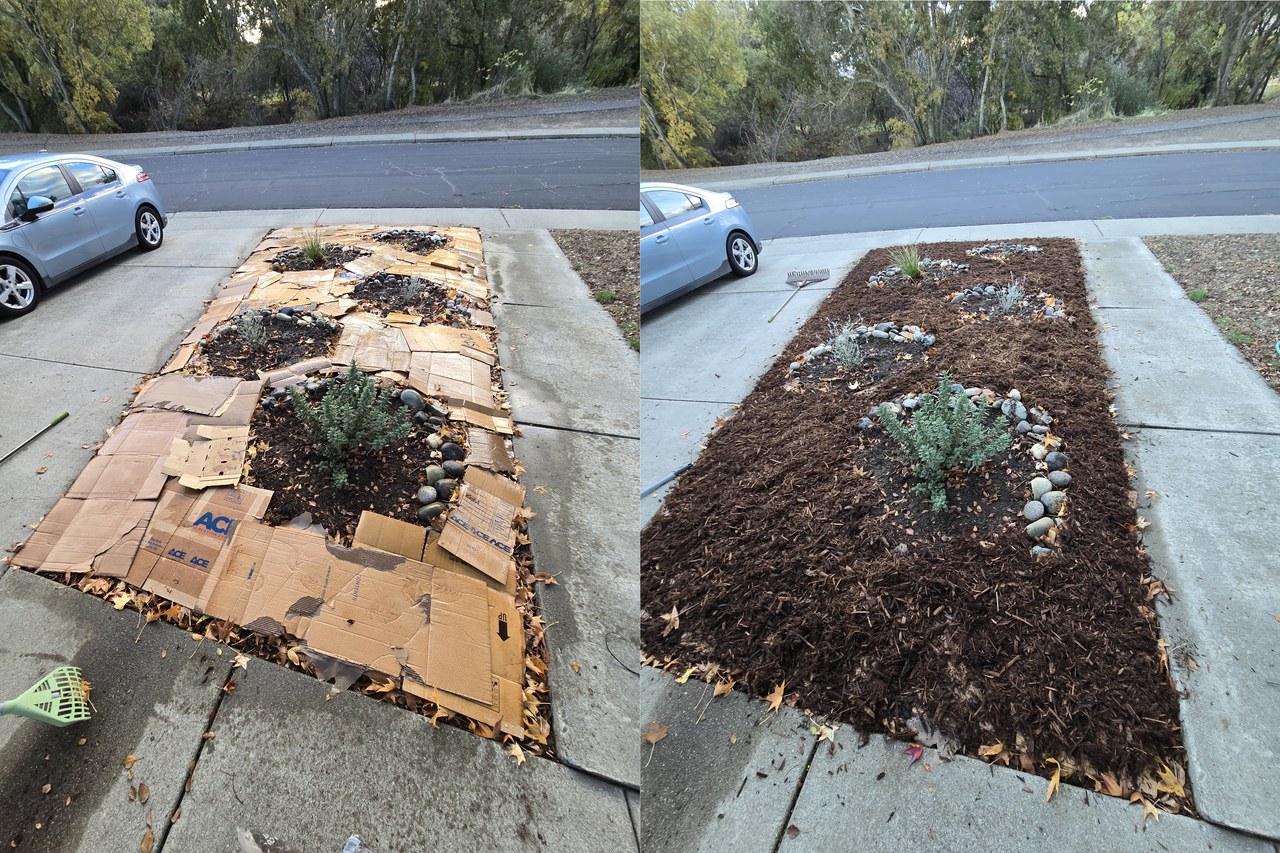
- First identify the plants. Poison ivy, knotweed, bindweed, quackgrass, and other persistent perennials need species-specific control; do not simply bury a dangerous or invasive plant.
- Mow or cut ordinary vegetation low and water dry soil.
- Overlap clean, tape-free cardboard or several sheets of plain newspaper. Wet the barrier as it is laid.
- Cover it promptly with compost, shredded leaves, or wood chips. Keep the material away from trunks, siding, drains, and paths where soggy paper would be slippery.
- Watch the edges and pull new shoots before they rebuild their roots.
Do not till the partly decomposed barrier into soil. Wait until the paper has softened and roots can reach the soil below. To plant sooner, open a generous hole and fill it with appropriate soil—not a narrow plastic-lined pocket that traps roots or water.
Sheet mulch may need a full growing season, and tough weeds can take longer. A garden rarely reads the same calendar as its gardener.